
December 12, 2025
Case Study: How Joe Janus Got 166% More Deals Without Writing a Single Email

When Joe Janus started logging activity in Follow Up Boss consistently, something shifted. The CRM he'd been paying for finally started working the way it was supposed to.
In August 2024, after implementing the KTS setup earlier that year, the numbers started moving in the right direction.
Before KTS: Flying Blind
Joe had been in real estate since 2005, working part-time for years before jumping in with both feet. By the time he found KTS, he'd built a solid reputation in Phoenix's architecturally distinctive home market. But his backend systems were another story.
He had 600+ contacts with email addresses sitting in his database. No consistent tracking. No clear stages. No daily workflow.
When he opened his CRM, he didn't know where to start or who to call first.
"Follow Up Boss is a beast," Joe explained. "People go into analysis paralysis. I was fairly technology savvy, but I saw technology going at such a fast pace I could not keep up. So I needed help."
His biggest concern? "I don't want to break anything. I want to learn from other people's best practices."
Joe knew he needed expert help. And he was honest about his limitations: "The last thing I want to do and can do is write action plans and automations and emails. 10, 15, 20, 30 emails and texts. That just overwhelms me. My job is to really be out either writing contracts or getting listings."
On his implementation call, Joe said it plainly: "I know I feel less stressed, knowing that this was put together because I couldn't have done it. There's no way."
Follow Up Boss is powerful. But without structure, it's overwhelming.
The Results
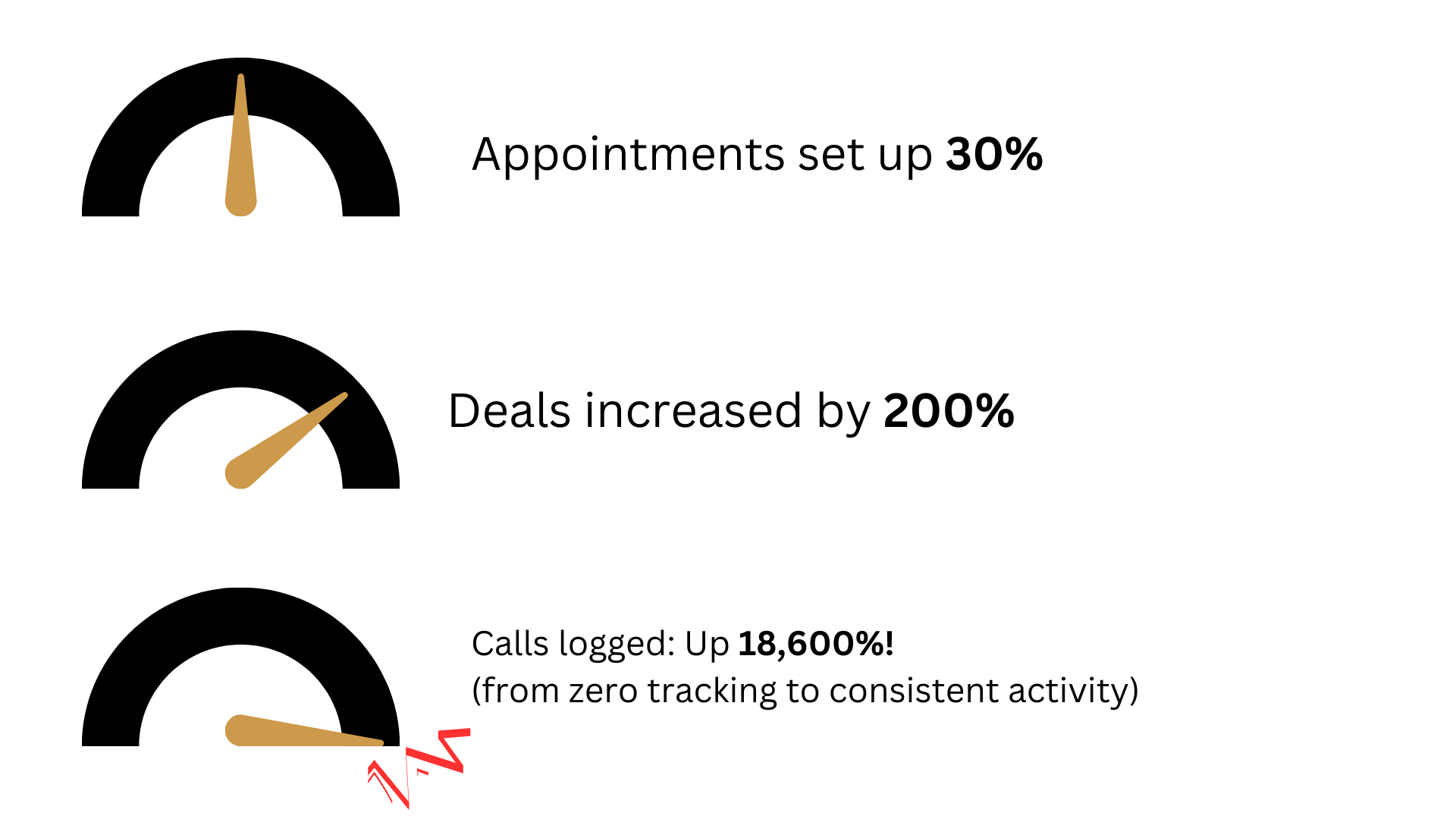
Aug 2024–Dec 2024 vs Mar 2024–July 2024:
Appointments set: Up 30%
Average call attempts per lead: Up 25%
Jan 2025–May 2025 vs Aug 2024–Dec 2024:
Average call attempts: Up 23%
Deals closed: Up 200%
June 2025–Dec 2025 vs Nov 2024–May 2025:
Calls logged: Up 18,600% (from zero tracking to consistent activity)
Deals closed: Up 166%
The numbers tell part of the story. But the real proof is in what happened with leads like Mike.
A Lead That Almost Slipped Through
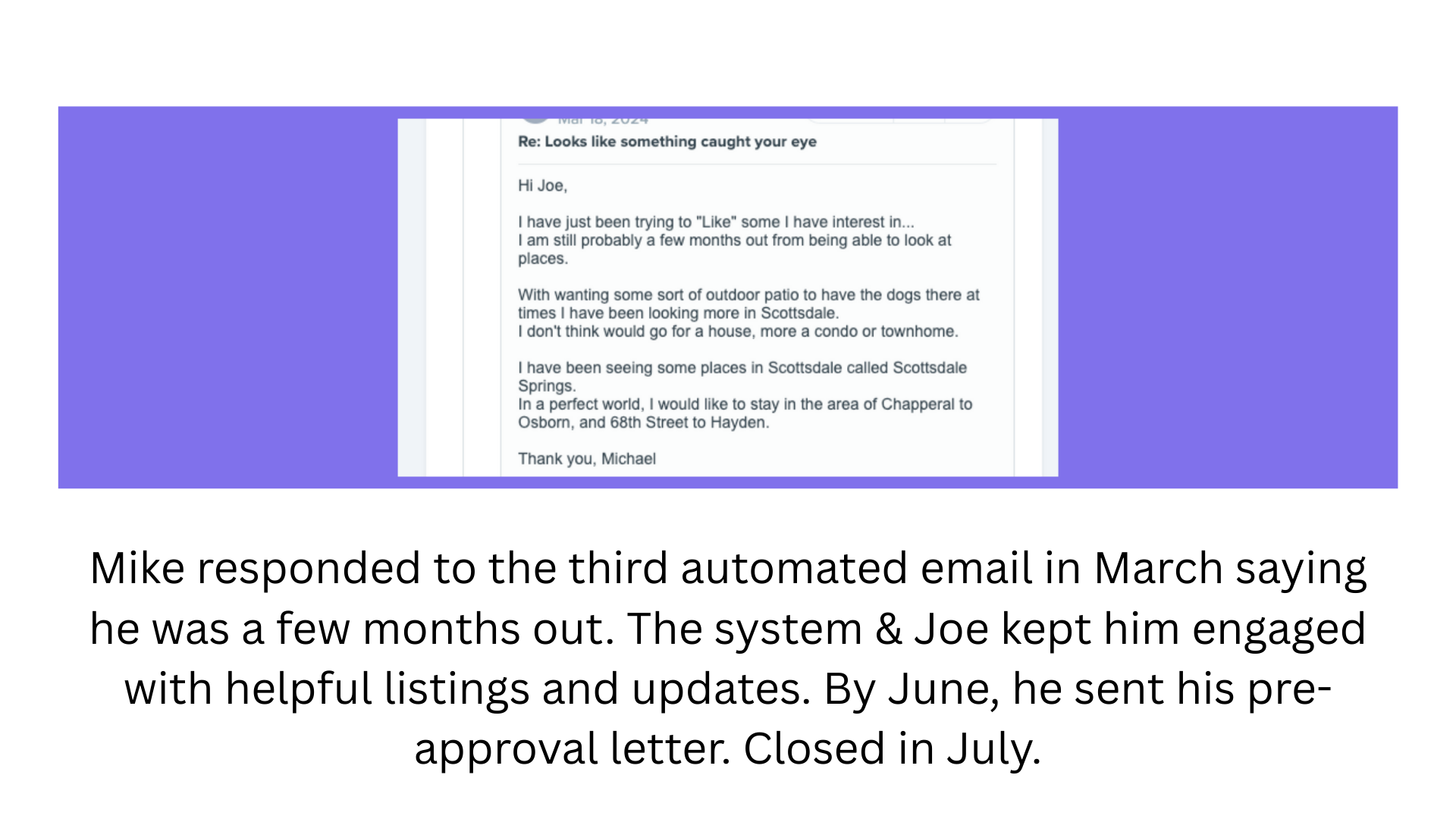
Mike had been browsing listings online. He clicked through to Joe's website, looked at a few properties, then left.
Most agents would have called once, maybe twice, then moved on.
But with KTS automation running in the background, Mike got email #3 from the "Back to Website" action plan. He responded.
Not with "I'm ready to buy." Just with "I'm still a few months out."
That's where most follow-up dies. But Joe's system kept working.
Here's What Actually Happened:
March 18, 2024: Mike responds to automated email, says he's interested but a few months out. Mentions wanting outdoor space for his dogs. Prefers Scottsdale area, specifically around Chapperal to Osborn, 68th Street to Hayden.
June 15, 2024: Mike reaches out again. Updates his timeline. Mentions he's getting closer.
June 25, 2024: Mike sends his pre-approval letter. Ready to look at homes. Joe schedules showings.
July 2024: Deal closes.
Between March and July, Joe's system sent Mike 21 emails. All automated. All designed to stay top of mind without being pushy. Joe also sent home listings through RealScout based on Mike's preferences.
Mike didn't need constant phone calls. He needed consistent, helpful information. And when he was ready, he knew exactly who to contact.
The System Behind the Result
The KTS setup gave Joe three things he didn't have before:
Smart follow-up that runs automatically. Mike got emails at the right intervals without Joe having to remember or manually schedule anything. "The automations are always running in the background," Joe said. "You guys were able to create automations and action plans based on leads that would come from Street Text, from Z Buyer. Those were already created."
Integration with his existing tools. RealScout listings synced with Follow Up Boss. When Mike viewed properties, Joe could see it and follow up accordingly.
A clear daily workflow. Instead of opening his CRM and wondering who to call, Joe had prioritized smart lists showing exactly which leads needed attention.
What Changed
Joe's transformation wasn't just about metrics. It was about clarity.
"The visibility into my database as to who are the key people to reach out to, who are showing some sort of buyer or seller interest, is brought to the forefront," Joe explained. "Before, I had a bunch of contacts that I didn't know what they were doing. I did not have visibility into my database as to people's activity."
Working with KTS changed that. "It helped me just organize things in a much better way. Much more clarity into my database. Who to call, when to call, why to call. These people are showing a lot of activity, so we're going to put them up here in your call-first kinds of folks."
Before consistent CRM tracking, Joe was flying blind. He had leads coming in, but no system to work them.
Now, leads like Mike get immediate, personalized follow-up based on their behavior. Website visitors get one sequence. Prospects at different timeline stages get appropriate nurture. Past clients stay connected through long-term campaigns.
Joe didn't build any of it. The system was done for him. He just logs his calls, updates stages when contacts move forward, and lets automation handle the rest.
Why Joe Stays with KTS
Joe is with Compass, which offers its own CRM suite. But he's not switching.
"I've already built out everything in Follow Up Boss, and there are people like you who only know Follow Up Boss. I'm not willing to give up my Follow Up Boss, my Kee Technology folks, to go over to Compass's CRM in its entirety."
When asked about working with KTS, Joe was direct: "I've never felt sold, never felt sold by anything that you guys do. It is about providing value and help to improve business. And that to me just speaks volumes."
Looking to Build a System That Actually Converts Leads?
The difference between a CRM you pay for and a CRM that makes you money is simple: implementation.
Joe's results didn't come from better leads or more marketing spend. They came from putting proven systems in place and using them consistently.